Augmented Reality (AR) overlays digital content, like text, images, or animations, onto the real world through devices like smartphones, tablets, or AR glasses. You’ve probably seen it in action in apps like Pokémon GO or IKEA’s room visualizer. But in the world of language training, AR is becoming a game-changer. Why? Because language isn’t just […]
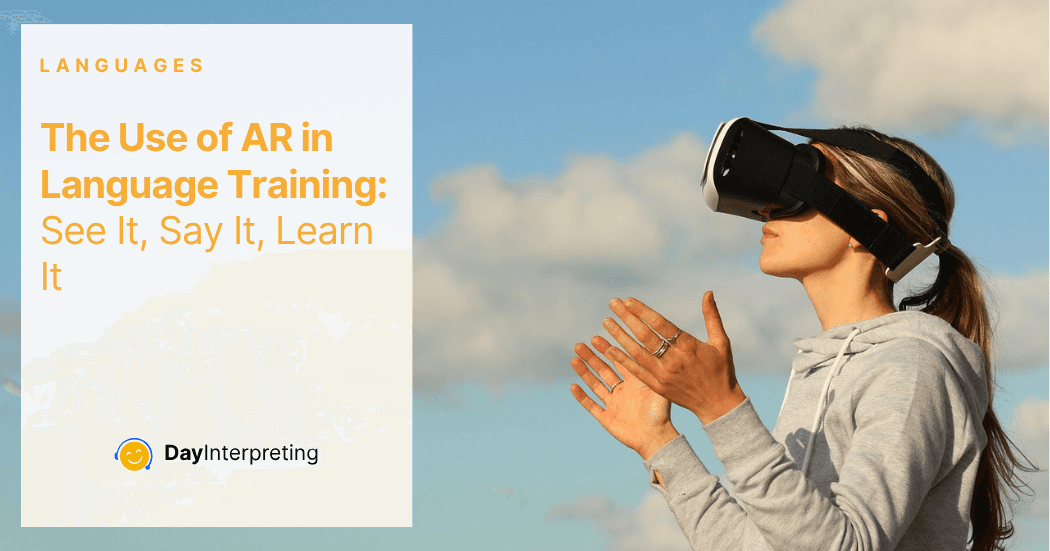
Augmented Reality (AR) overlays digital content, like text, images, or animations, onto the real world through devices like smartphones, tablets, or AR glasses. You’ve probably seen it in action in apps like Pokémon GO or IKEA’s room visualizer. But in the world of language training, AR is becoming a game-changer.
Why? Because language isn’t just about words, it’s about context. And AR can put learners right into real-world scenarios where context and communication come alive together.
Traditional language learning often lacks immersion. Reading vocabulary lists or grammar rules can only get you so far. AR, however, can:
Instead of just learning the word banana, you could walk into a virtual kitchen, pick one up, and hear it pronounced in your target language. That’s active, multi-sensory learning, and it’s proven to improve retention and recall.
AR apps like Mondly AR allow users to see and interact with animated tutors who guide them through conversations. You can label objects in your room with vocabulary words in different languages, see your mirror become espejo or miroir instantly.
AR enables “on-the-spot” roleplay. Imagine holding your phone up in a grocery store and having the app translate product names or simulate dialogue with a digital clerk. Some AR apps even offer conversation prompts and feedback, helping you master not just the words but the flow of interaction.
Apps like uTalk AR and Mondly VR (which also integrate AR features) allow you to practice speaking aloud and use voice recognition to assess your pronunciation. You talk to virtual characters who react, just like in real life!
So, what does this mean for interpreting?
Interpreters often train in high-pressure, fast-paced scenarios. AR offers a perfect tool for:
AR can also help interpreting trainers build custom modules for students, creating controlled environments where learners can safely practice and get feedback before working with actual clients.
With companies like Meta, Apple, and Google pushing deeper into AR tech, and more apps tailoring experiences for language learners, it’s not far-fetched to imagine that AR will become a standard part of interpreter education and continuing development.
For multilingual professionals, this means access to better training tools, faster skill development, and increased confidence on the job.
Language is lived, not just learned, and AR brings it to life in ways we never imagined a decade ago. For learners, trainers, and interpreters alike, augmented reality is more than a tech trend. It’s a tool for connection, preparing language professionals to meet the challenges of a rapidly globalizing, tech-driven world, one virtual conversation at a time.

Seldean is a multi-skilled content wizard that dedicates herself to writing content that goes beyond merely sparking interest in the audience.

Written by
Seldean SmithSeldean is a multi-skilled content wizard that dedicates herself to writing content that goes beyond merely sparking interest in the audience.
Get the latest articles on interpreting and language access delivered straight to your inbox.


