In mental health care, psychiatry, counseling, and therapy, communication is more than just words. It encompasses tone, cultural nuance, emotional subtext, and context. Yet recent studies across countries, including New Zealand, Germany, South Africa, and the Netherlands, reveal that patients with limited English proficiency (LEP) often do not receive professional interpretation during mental health consultations, […]
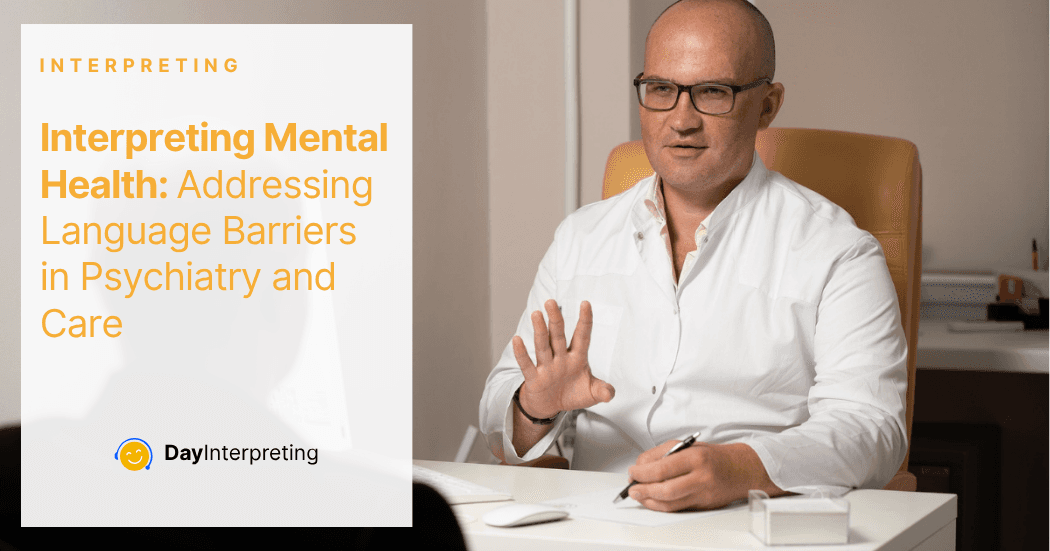
In mental health care, psychiatry, counseling, and therapy, communication is more than just words. It encompasses tone, cultural nuance, emotional subtext, and context. Yet recent studies across countries, including New Zealand, Germany, South Africa, and the Netherlands, reveal that patients with limited English proficiency (LEP) often do not receive professional interpretation during mental health consultations, leading to misdiagnoses and poor therapeutic outcomes.
People navigating mental health issues share complex emotional experiences. Interpreters must not only translate words but also mediate cultural concepts of distress, mental illness, and therapeutic acceptance.
LEP patients frequently experience lower engagement, misinterpretation of symptoms, and reduced adherence to treatment plans. Research from New Zealand shows that although interpreter use is officially recommended, actual utilization remains extremely low, often below 1% in practice SAGE Journals. Similar issues arise in New Zealand, Australia, and similarly in many parts of Europe, where awareness does not translate into access.
In many healthcare settings, informal interpreters, family, security guards, or bilingual staff, fill the gap. This may create confidentiality breaches, ethical dilemmas, emotional harm, and erosion of trust, especially in sensitive mental health contexts.
Some expressions of distress are bound to cultural or religious frameworks. Without supervision or mental-health-specific training, interpreters may miss or misrepresent these subtleties, as multiple studies in psychiatry have documented.
In mental health consultations, interpreters mediate between clinician and patient. They participate in clinician–interpreter, interpreter–patient, and patient–clinician dynamics. Misalignment or power imbalance across any dyad can hinder therapeutic rapport.
Strong training is needed in trauma-informed practice, psychological terminology, cultural explanations of mental suffering, and ethical boundaries. Yet many professional registers lack mandatory mental health modules, and interpreters seldom receive ongoing emotional support or supervision.
A recent pilot study integrating Automatic Speech Recognition (ASR) with AI-generated summaries in remote medical interpreting revealed measurable improvements in interpretation quality and accuracy, especially in clinical dialogue accuracy and interpreter performance. While mental-health-specific research is still limited, these tools show promise, especially when used under interpreter supervision.
Healthcare systems in several countries, including the UK and New Zealand, are beginning to emphasize polycultural competence: combining language fluency with cultural humility and an understanding of different explanatory models of illness.
As societies grow more culturally and linguistically diverse, equitable mental health access demands high-quality language services. While language access regulations exist, interpreter usage in mental health remains critically low. Without specialized interpreters, marginalized individuals, especially refugees, migrants, and indigenous populations, risk falling through the gaps.
In a mental health appointment, every pause, metaphor, and phrase counts. Interpreters are guardians of meaning, and in mental health, they are often gatekeepers of accurate diagnosis, emotional safety, and therapeutic trust.
As of July 2025, the industry must move beyond generic interpreting towards professional, trauma-informed, culturally sensitive mental health interpreting. In doing so, interpreters become not just conveyors of language, but advocates for mental health equity and dignity for all.

Seldean is a multi-skilled content wizard that dedicates herself to writing content that goes beyond merely sparking interest in the audience.

Written by
Seldean SmithSeldean is a multi-skilled content wizard that dedicates herself to writing content that goes beyond merely sparking interest in the audience.
Get the latest articles on interpreting and language access delivered straight to your inbox.


