A furrowed brow. A shrug. A smirk just as someone says, “Sure, I agree.” We all read these signals without even realizing it — and interpreters? Interpreters decode body language like seasoned pros! While most people think interpreting is all about words, professionals know that non-verbal communication can change everything. Body language, tone, and facial […]
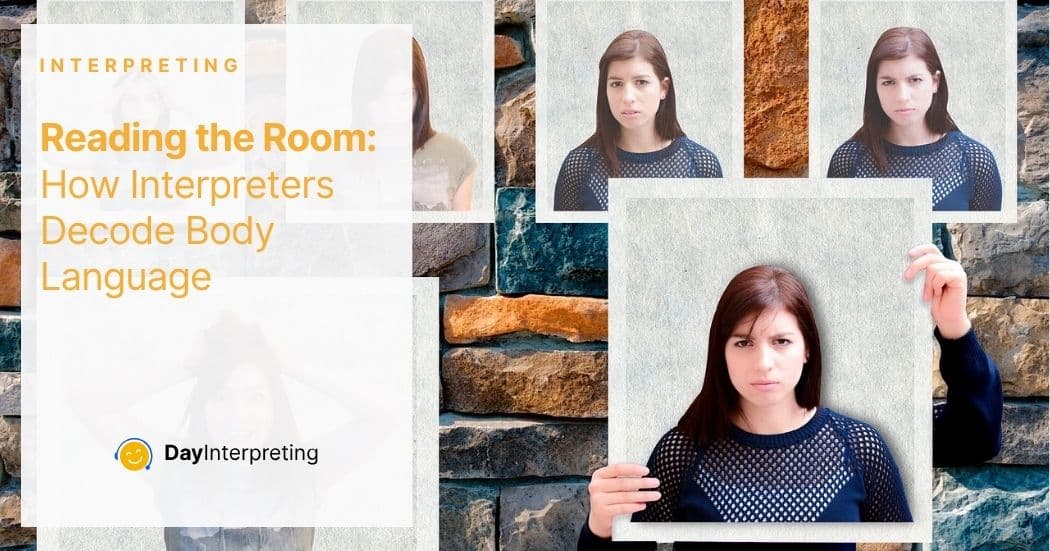
A furrowed brow. A shrug. A smirk just as someone says, “Sure, I agree.” We all read these signals without even realizing it — and interpreters? Interpreters decode body language like seasoned pros!
While most people think interpreting is all about words, professionals know that non-verbal communication can change everything. Body language, tone, and facial expression — these subtle cues can reveal what words hide or don’t say at all.
Non-verbal communication includes:
It’s the unspoken part of communication that often speaks the loudest.
And interpreting it correctly? That’s an art.
Imagine interpreting for a couple in mediation. The husband says, “It’s fine.” But he’s glaring at the wall and his fists are clenched. Is it really fine? Probably not.
Or you’re in a medical setting. A child says “I’m okay” but tears up. That’s a cue an interpreter needs to pick up on—not to overstep, but to flag that emotional tone may need to be acknowledged.
Tone and gesture provide emotional colour. They show hesitation, sarcasm, anger, or fear—things that are vital to capture, especially in:
Here’s where it gets tricky.
Body language isn’t universal. What means “yes” in one country might mean “no” in another.
Cultural Examples:
Good interpreters don’t just translate—they mediate between cultures. That includes adjusting their interpretation of gestures and tone, and sometimes explaining to clients why something “feels off” even if it sounds okay.
This is where interpreting gets delicate.
If someone says, “I’m happy with the decision,” but their body screams discomfort, what should the interpreter do?
They can’t editorialise—but they can use tone, hesitations, or qualifiers to reflect what’s truly happening.
For example:
It’s about fidelity—not just to the words, but to the intent behind them.
Interpreters also need to be aware of their own body language. In high-stakes settings, staying neutral is crucial. A sigh, eye-roll, or even an empathetic head tilt can influence the perception of what’s being said.
So yes, interpreters are trained to be invisible—but also alert, expressive, and responsive when necessary.
Interpreting is often thought of as simply translating words in and out. But the best interpreters know that meaning doesn’t stop at the sentence level—it’s written on faces, felt in silences, and whispered in body language.
They don’t just translate the spoken—they capture the human.
So the next time you watch an interpreter at work, remember they’re not just listening. They’re reading the room, one raised eyebrow at a time.

Seldean is a multi-skilled content wizard that dedicates herself to writing content that goes beyond merely sparking interest in the audience.

Written by
Seldean SmithSeldean is a multi-skilled content wizard that dedicates herself to writing content that goes beyond merely sparking interest in the audience.
Get the latest articles on interpreting and language access delivered straight to your inbox.


