As demand for multilingual content grows, a quieter, but critically important, trend is gaining traction: sustainable localization. In 2025, Language Service Providers (LSPs) and interpreting firms are increasingly adopting eco-conscious practices to reduce their environmental impact. Here’s why “green localization” is trending now, where sustainability in language services is heading, and what it means for […]
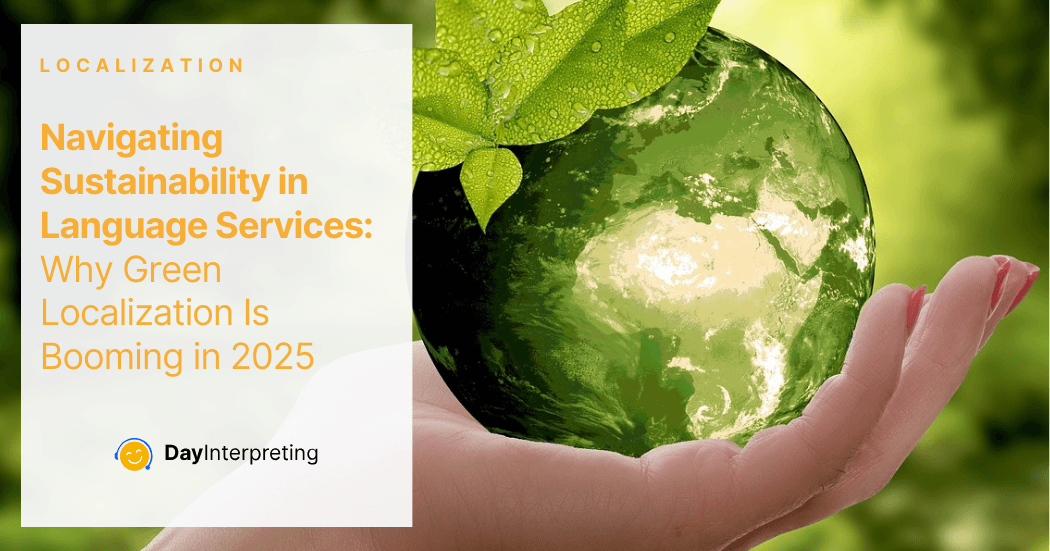
As demand for multilingual content grows, a quieter, but critically important, trend is gaining traction: sustainable localization. In 2025, Language Service Providers (LSPs) and interpreting firms are increasingly adopting eco-conscious practices to reduce their environmental impact. Here’s why “green localization” is trending now, where sustainability in language services is heading, and what it means for your interpreting business.
Training large language models can be astonishingly energy-intensive, GPT-3, for instance, uses over 1,200 MWh of energy to train, akin to the power of 330 U.S. homes for a year. However, many LSPs still rely on paper-heavy workflows and on-premise servers.
The environmental cost is prompting a shift toward low-impact operations that clients increasingly prioritize.
Optimize your infrastructure:
Begin tracking indicators like energy use and document volume. Even basic metrics (e.g., hours spent editing large files or paper usage) can form the basis of a sustainability overview.
Clients, especially those in corporate social responsibility sectors, may prioritize vendors who align with their own sustainability goals. Promote your green practices in proposals and marketing.
Look into emerging certifications that audit your carbon footprint, e-waste policy, and energy practices. This demonstrates commitment and can differentiate your brand.
At conferences or interpreting events, lean into sustainability:
Going green isn’t just trendy, it’s becoming fundamental. In 2025, with AI’s energy demands under scrutiny and regulatory frameworks tightening, sustainability is no longer optional, it’s essential.
For interpreters and language service providers, embracing green localization is both a long-term strategy and a timely differentiator. By committing to eco-conscious operations, your business won’t just reduce emissions, it will align with global sustainability goals while maintaining quality, relevance, and ethical responsibility.

Milos is an experienced digital marketing and communication strategist, based in Bergamo, Italy. He is skilled in search engine optimization, content development and promotion, translation and localization. He is proficient in English, Italian and the Western Balkans languages.

Written by
Milos MilosevicMilos is an experienced digital marketing and communication strategist, based in Bergamo, Italy. He is skilled in search engine optimization, content development and promotion, translation and localization. He is proficient in English, Italian and the Western Balkans languages.
Get the latest articles on interpreting and language access delivered straight to your inbox.


