

When most people think of interpreting, they picture conference booths, legal hearings, or business meetings. But in 2025, interpreters are increasingly stepping into a very different role, acting as linguistic first responders while interpreting in crisis zones. Whether during natural disasters, humanitarian aid efforts, or emergency evacuations, interpreters are becoming vital links between those in […]
The interpreting world has always been about bridging gaps, language, culture, and context. But in 2025, “bridging” has evolved into something far more dynamic. Interpreting is no longer confined to voice or text. Thanks to the rise of multimodal interpreting, professionals are now blending audio, video, text, and even visual cues into a single, seamless […]
On August 8, 2025, Boostlingo quietly rolled out the beta version of its AI Interpreter, a brand-new feature offering real-time, context-aware interpreting across multiple languages and industry settings. This comes at a pivotal moment, when AI isn’t just assisting but acting in real time to fill communication gaps. For interpreters, this leap invites both curiosity […]
As hospitals race to adopt AI-powered clinical interpreting tools, there’s a growing need to slow down and ask: Are we doing this responsibly? When lives, language, and trust are on the line, ethics can’t be an afterthought. Clinical interpreting powered by artificial intelligence brings undeniable benefits, speed, scalability, and 24/7 access, but it also raises […]
On March 1, 2025, President Trump signed Executive Order 14224, declaring English the official language of the United States, a significant first in the country’s history. But what does the new Federal Language Policy really mean? The order rescinds Executive Order 13166 (issued by President Clinton), which had guided federal language assistance for people with limited English proficiency […]

Working as an interpreter is both rewarding and intensely demanding. In recent Reddit threads, interpreters across modalities, especially in sign language and video remote interpreting services (VRI/VRS), describe soaring levels of anxiety, vicarious trauma, and professional stress, exacerbated by political instability, social unrest, and the constant fear of job erosion. Interpreter well-being is a hot […]
Imagine you’re in a hospital and you don’t speak the doctor’s language. Waiting for a human interpreter isn’t just inconvenient, it can cost lives. Healthcare systems are tackling this gap by deploying voice-activated interpreters and AI-powered interpreting solutions that provide instant access to professional interpreters across hundreds of languages and sign languages. Meet the Innovation: […]
In mental health care, psychiatry, counseling, and therapy, communication is more than just words. It encompasses tone, cultural nuance, emotional subtext, and context. Yet recent studies across countries, including New Zealand, Germany, South Africa, and the Netherlands, reveal that patients with limited English proficiency (LEP) often do not receive professional interpretation during mental health consultations, […]
An AI interpreter workflow refers to the integration of artificial intelligence tools into the process of interpreting, whether for live events, virtual meetings, or recorded content. These workflows help streamline the phases of interpretation, including before, during, and after. To be clear, AI isn’t here to replace human interpreters; it’s here to enhance their capabilities. […]
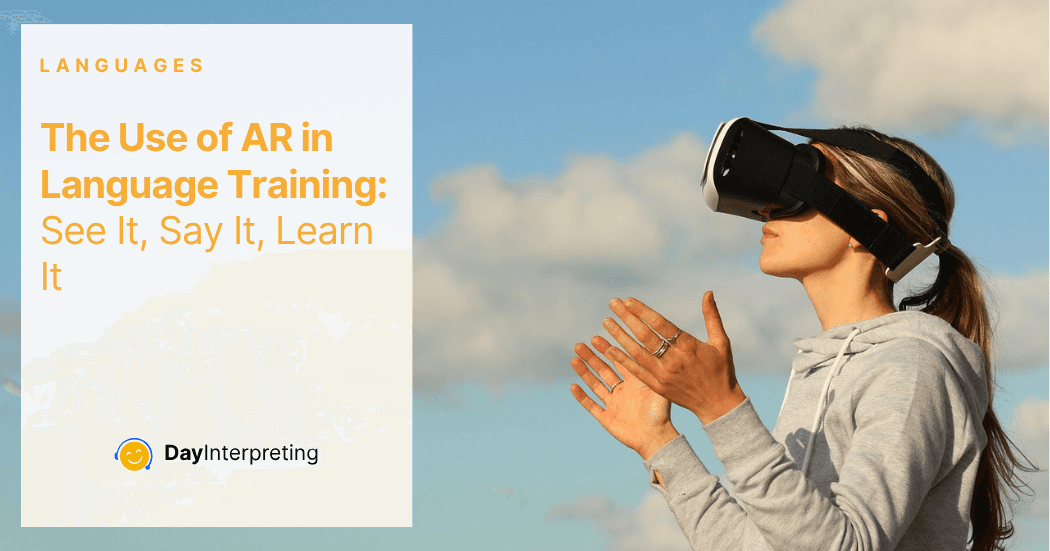
Augmented Reality (AR) overlays digital content, like text, images, or animations, onto the real world through devices like smartphones, tablets, or AR glasses. You’ve probably seen it in action in apps like Pokémon GO or IKEA’s room visualizer. But in the world of language training, AR is becoming a game-changer. Why? Because language isn’t just […]
Recent research by the Max Planck Institute shows that since the rise of ChatGPT, English speakers have increased use of words like delve, meticulous, and adept, some by as much as 51%, without even realizing it. AI isn’t just translating our language; it’s shaping how we speak and actively driving the evolution of the language […]
AI hasn’t just arrived; it’s redefining interpreting services. However, instead of replacing human talent, AI is collaborating with linguists in powerful hybrid models. Platforms like KUDO and Slator predict that by the end of 2025, 40% of interpreting services will adopt this blend: AI handles routine output, while humans tackle nuance, emotion, and culture-heavy contexts. […]

